About Capote
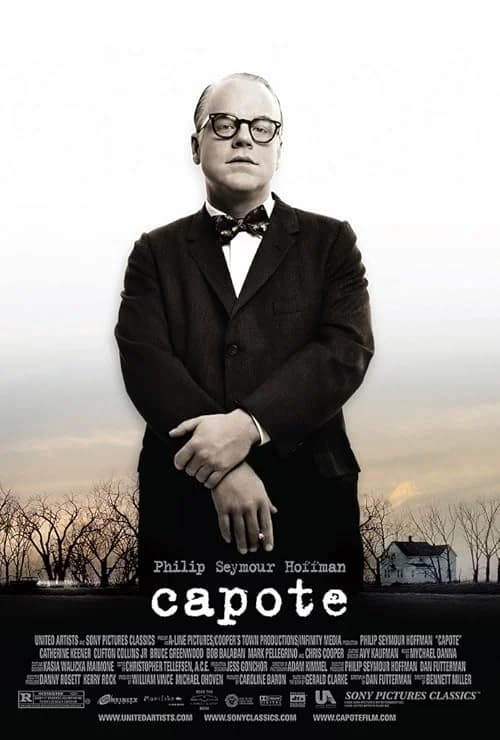
Capote (2005) is a masterful biographical drama that chronicles the pivotal years when author Truman Capote researched and wrote his groundbreaking true crime novel, In Cold Blood. The film focuses on Capote's complex relationship with Perry Smith, one of the two men convicted of murdering a Kansas family in 1959. As Capote delves deeper into the case, his professional ambition becomes entangled with a disturbing personal connection to Smith, raising profound ethical questions about art, exploitation, and empathy.
Philip Seymour Hoffman delivers an Oscar-winning performance that is nothing short of transformative, perfectly capturing Capote's distinctive voice, mannerisms, and internal conflict. Director Bennett Miller creates a tense, atmospheric film that is less about the grisly crime itself and more about the psychological toll its documentation takes on the writer. The supporting cast, including Catherine Keener as Harper Lee and Clifton Collins Jr. as Perry Smith, provides excellent counterpoints to Hoffman's central figure.
Viewers should watch Capote for its brilliant character study and exploration of the moral gray areas inherent in storytelling. It's a compelling, slow-burn drama that examines the cost of genius and the uncomfortable intimacy that can form between observer and subject. The film's restrained direction and powerhouse performances make it a standout in the biographical genre, offering a haunting look at the creation of a literary landmark and the personal devastation it wrought.
Philip Seymour Hoffman delivers an Oscar-winning performance that is nothing short of transformative, perfectly capturing Capote's distinctive voice, mannerisms, and internal conflict. Director Bennett Miller creates a tense, atmospheric film that is less about the grisly crime itself and more about the psychological toll its documentation takes on the writer. The supporting cast, including Catherine Keener as Harper Lee and Clifton Collins Jr. as Perry Smith, provides excellent counterpoints to Hoffman's central figure.
Viewers should watch Capote for its brilliant character study and exploration of the moral gray areas inherent in storytelling. It's a compelling, slow-burn drama that examines the cost of genius and the uncomfortable intimacy that can form between observer and subject. The film's restrained direction and powerhouse performances make it a standout in the biographical genre, offering a haunting look at the creation of a literary landmark and the personal devastation it wrought.