About Purple Noon
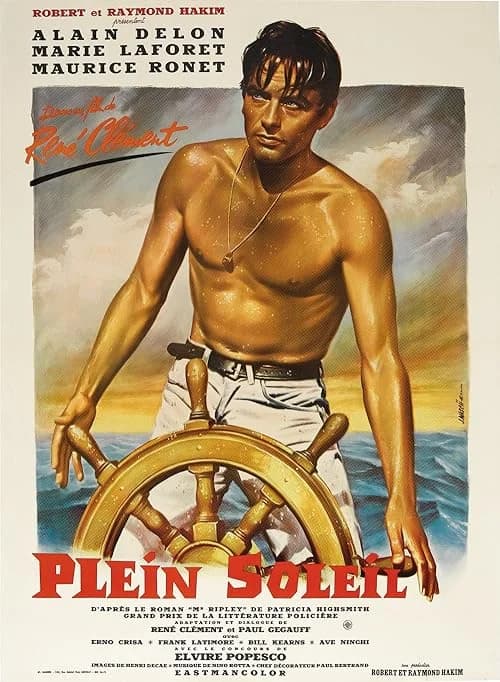
Purple Noon (original title Plein Soleil) stands as one of the most stylish and psychologically compelling thrillers of French cinema. Directed by René Clément, this 1960 adaptation of Patricia Highsmith's novel 'The Talented Mr. Ripley' predates the more famous Hollywood versions and delivers a uniquely chilling atmosphere. The film follows Tom Ripley, a charismatic but morally ambiguous young man played with mesmerizing duplicity by Alain Delon, as he accompanies his wealthy friend Philippe Greenleaf on a yachting trip in Italy.
The sun-drenched Mediterranean setting provides a stark, beautiful contrast to the dark deeds that unfold. The plot masterfully builds tension as Ripley's envy and opportunism lead him to commit murder and then attempt to assume Philippe's identity, wealth, and life. Alain Delon's performance is iconic—his cold beauty and calm demeanor make Ripley's calculated actions all the more terrifying. The supporting cast, including Marie Laforêt as Marge, adds depth to this web of deception.
René Clément's direction is precise and atmospheric, using the vibrant colors and locales to heighten the sense of unease. The cinematography by Henri Decaë is breathtaking, making the film a visual feast that belies its sinister core. Unlike later adaptations, Purple Noon maintains a more ambiguous and European sensibility, focusing on the psychological unraveling rather than overt moralizing.
Viewers should watch Purple Noon not only as a cornerstone of the thriller genre but as a masterclass in suspense filmmaking. Its influence can be seen in countless subsequent psychological dramas. The film explores themes of identity, class, and desire with a sophistication that remains gripping over sixty years later. For anyone interested in classic world cinema or the origins of the modern psychological thriller, this is an essential and utterly captivating experience.
The sun-drenched Mediterranean setting provides a stark, beautiful contrast to the dark deeds that unfold. The plot masterfully builds tension as Ripley's envy and opportunism lead him to commit murder and then attempt to assume Philippe's identity, wealth, and life. Alain Delon's performance is iconic—his cold beauty and calm demeanor make Ripley's calculated actions all the more terrifying. The supporting cast, including Marie Laforêt as Marge, adds depth to this web of deception.
René Clément's direction is precise and atmospheric, using the vibrant colors and locales to heighten the sense of unease. The cinematography by Henri Decaë is breathtaking, making the film a visual feast that belies its sinister core. Unlike later adaptations, Purple Noon maintains a more ambiguous and European sensibility, focusing on the psychological unraveling rather than overt moralizing.
Viewers should watch Purple Noon not only as a cornerstone of the thriller genre but as a masterclass in suspense filmmaking. Its influence can be seen in countless subsequent psychological dramas. The film explores themes of identity, class, and desire with a sophistication that remains gripping over sixty years later. For anyone interested in classic world cinema or the origins of the modern psychological thriller, this is an essential and utterly captivating experience.