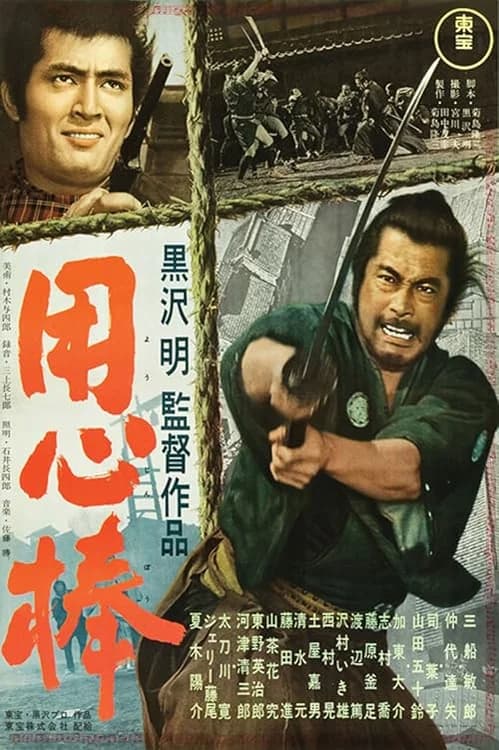
About Yojimbo
Akira Kurosawa's 1961 masterpiece Yojimbo stands as one of the most influential films in cinema history, blending samurai action with dark comedy and moral complexity. The film follows Sanjuro, a masterless samurai played with iconic swagger by Toshiro Mifune, who arrives in a town torn apart by two rival criminal factions. Seeing an opportunity, Sanjuro decides to play both sides against each other, offering his services as a bodyguard (yojimbo) to each gang while secretly orchestrating their mutual destruction.
Toshiro Mifune's performance as the cynical, resourceful ronin remains one of his most memorable roles, perfectly capturing the character's world-weary wisdom and lethal skill. Kurosawa's direction is masterful, creating a tense, atmospheric world where violence simmers beneath every interaction. The film's cinematography, with its dramatic compositions and striking use of shadow, creates a visual language that would influence countless Westerns and action films.
What makes Yojimbo essential viewing is its brilliant narrative construction and moral ambiguity. Sanjuro is neither traditional hero nor villain, but a pragmatic force of chaos who uses the town's corruption against itself. The film's themes of manipulation, power, and redemption resonate as strongly today as in 1961. For anyone interested in classic cinema, samurai films, or simply great storytelling, Yojimbo offers a perfectly crafted cinematic experience that continues to inspire filmmakers worldwide.
Toshiro Mifune's performance as the cynical, resourceful ronin remains one of his most memorable roles, perfectly capturing the character's world-weary wisdom and lethal skill. Kurosawa's direction is masterful, creating a tense, atmospheric world where violence simmers beneath every interaction. The film's cinematography, with its dramatic compositions and striking use of shadow, creates a visual language that would influence countless Westerns and action films.
What makes Yojimbo essential viewing is its brilliant narrative construction and moral ambiguity. Sanjuro is neither traditional hero nor villain, but a pragmatic force of chaos who uses the town's corruption against itself. The film's themes of manipulation, power, and redemption resonate as strongly today as in 1961. For anyone interested in classic cinema, samurai films, or simply great storytelling, Yojimbo offers a perfectly crafted cinematic experience that continues to inspire filmmakers worldwide.